
How short should you cut your lawn? In Minnesota, the answer depends on the type of grass, the weather, and how quickly it is growing. Cutting too low can expose the soil to sun and make the grass more vulnerable to heat and drying. Letting it grow without adjusting your mowing schedule can create a different problem: removing too much at once.
For many established Minnesota lawns made up of cool-season grasses, roughly 3 to 4 inches is a practical mowing-height target during much of the growing season. That is a starting point, not a universal setting. Some grass mixtures and site conditions call for a different approach. Here’s how to make a sensible decision for your own property.
Start with the grass, not the mower dial
Minnesota lawns commonly include Kentucky bluegrass, fine fescues, perennial ryegrass, or mixes of those grasses. They do not all respond in exactly the same way to close cutting. A shady lawn with fine fescue, for example, may benefit from a relatively tall cut that preserves leaf area. Grass exposed to strong summer sun may also fare better when it is left longer.
Measure the grass after a pass rather than assuming the numbered marks on your mower correspond to inches. A setting labeled “3” on one machine may not produce a three-inch cut. Set the mower on level ground, mow a small test area, and check the actual blade height.
A seasonal mowing-height guide
Spring: ease into a consistent height
When growth resumes and the lawn is dry enough to support mowing without rutting, make your first cuts with a sharp blade. Avoid shaving off a large amount of growth in one pass. As the grass begins growing faster, adjust how often you mow to maintain an appropriate height rather than repeatedly cutting it extremely short.
Summer: leave more leaf blade during heat
In hot or dry weather, the taller end of the usual mowing range often makes sense. Longer grass blades help shade the ground and support the plant while conditions are stressful. If the lawn is barely growing during a dry spell, there may be no reason to mow on your usual schedule.
A taller lawn is not a substitute for proper watering, but very close mowing can add avoidable stress. Watch for brown, brittle turf, persistent wilting, and slow regrowth before deciding to cut again.
Fall: respond to growth, not a fixed date
Cooler temperatures can bring stronger growth after summer slows down. Continue mowing as needed while the lawn is actively growing. As the season ends, avoid dramatic last-minute scalping. For a broader fall-maintenance plan, see the fall lawn care checklist for Minnesota homeowners.
Follow the one-third rule
Try not to remove more than about one-third of the grass blade in a single mowing. This reduces the shock of a sudden close cut and helps the lawn retain enough leaf area for continued growth.
For example, if you want the lawn to finish at three inches, mow before it gets much beyond about four and a half inches. If it has already grown to six inches after a rainy stretch or vacation, do not immediately chop it down to three. Cut it higher first, allow some recovery time, and lower the setting over subsequent mowings.
The rule also explains why a rigid “every Saturday” schedule isn’t always ideal. In fast-growing weeks, grass may need attention sooner; in a dry spell, it may need less.
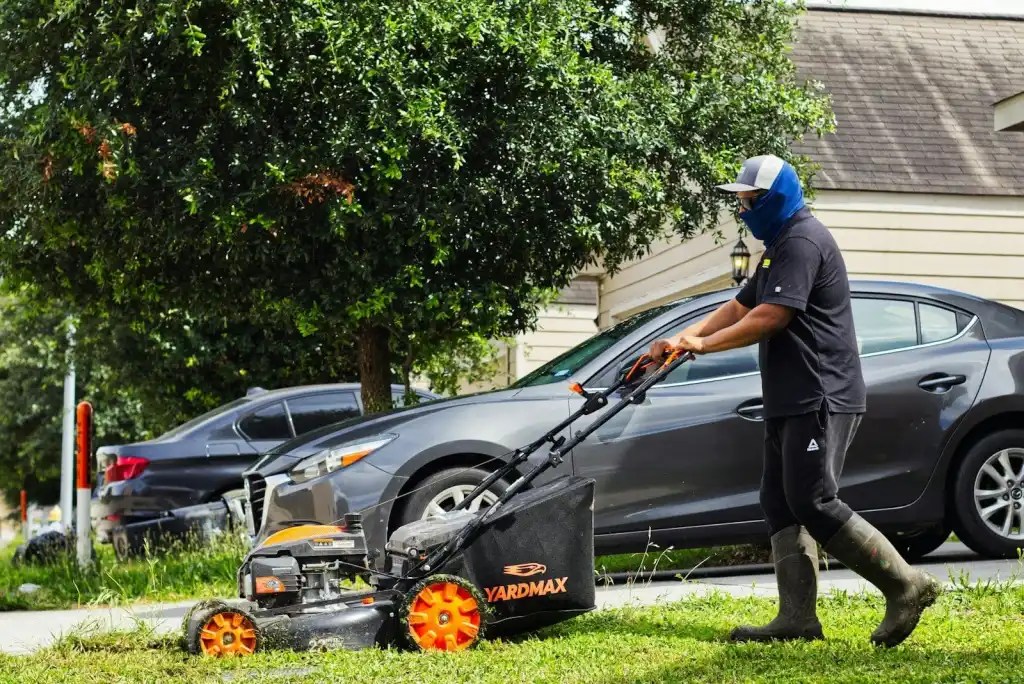
Five mowing habits that matter as much as height
1. Keep mower blades sharp
A dull blade tears grass instead of cutting it cleanly. Ragged, pale tips can make the lawn look tired even when the mowing height is appropriate. Inspect blades periodically and sharpen or replace them as needed, following the equipment manufacturer’s safety instructions.
2. Do not mow waterlogged ground
Wet soil is easy to compact or rut with mower wheels, and very wet clippings tend to clump. If the mower leaves tracks or grass is sticking heavily to the deck, postpone the job when practical. Never mow when conditions create unsafe footing or visibility.
3. Change your mowing direction
Varying your direction can reduce repeated wheel tracks in the same places and help prevent grass from consistently leaning one way. On slopes, however, safe operation always matters more than creating a stripe pattern; follow your mower’s operating instructions.
4. Handle clippings sensibly
When clippings are short and spread evenly, leaving them on the lawn can return organic material to the soil. If thick piles form, break them up or remove the excess so they do not smother grass underneath. Keep clippings out of streets and storm drains.
5. Protect the edges
Sharp-looking borders are useful, but trimming too low around trees, fences, beds, or sidewalks can leave bare spots. Be especially careful near tree trunks; string trimmers can damage bark. For homeowners who want consistent mowing and a finished look, Greenlawn Maintenance describes its lawn mowing services on the website.
What if part of the yard grows differently?
Most properties are not one uniform patch of grass. The shaded side yard may be thinner and slower growing than the open front lawn. A low spot may stay wet longer after rain. Grass beneath trees can face competition for both light and moisture.
Instead of using a single inflexible rule, walk the property before you mow. Leave shaded or drought-stressed areas taller when appropriate, avoid saturated ground, and skip areas that do not need cutting. If some sections remain weak despite careful mowing, the underlying issue may be drainage, soil condition, heavy foot traffic, or too little sunlight—not the mowing height alone.
Questions Minnesota homeowners often ask
Is two inches too short?
For many typical established cool-season home lawns, two inches is shorter than the preferred height during summer heat. Some specific grasses or management situations differ, but repeatedly cutting very low often creates unnecessary stress.
Should I mow shorter before winter?
There is no need to scalp the lawn as winter approaches. Continue managing its height as growth slows, avoiding the removal of a large amount of blade at once. Keep leaves and debris from forming a thick mat over the turf.
Will mowing taller mean mowing less often?
Not necessarily. Mowing frequency depends mostly on the grass’s growth rate and your target finished height. Taller mowing helps preserve leaf area, but rapidly growing grass still needs regular attention to follow the one-third rule.
Choose a height your lawn can maintain
A good mowing routine balances grass health, appearance, and the weather. For many Minnesota yards, starting around three to four inches, avoiding severe single cuts, and adapting during hot or wet periods is more useful than chasing the shortest possible finish.
If you’d rather have help keeping your property consistently maintained, explore lawn maintenance services or contact Greenlawn Maintenance to discuss your needs.